
In Cape May County, NJ, Rio Grande is one of the most bustling commercial districts. It’s filled with shopping plazas and restaurants and gas stations. While the industries may be different, these commercial properties have one thing in common: the flat roof system. That also means the shared weakness of standing water, which can happen throughout the year in South Jersey. Even small amounts of standing or ponding water can shorten your commercial roof’s lifespan and cause extensive damage.
Key Takeaways for Rio Grande Commercial Property Owners
- Standing water on flat commercial roofs is a common issue in Rio Grande due to frequent rainfall and coastal humidity.
- Ponding water accelerates membrane deterioration, seam failure, and insulation damage.
- Retail roofs are especially vulnerable around drains, HVAC units, and low-slope areas.
- Water that remains on a roof longer than 48 hours after rainfall is a warning sign.
- Routine inspections and drainage maintenance can prevent costly disruptions to retail operations.
Let’s look further at how standing water threatens commercial flat roofs in Rio Grande, NJ.
What Causes Standing Water on Commercial Flat Roofs?
Standing water is not just a problem that occurs when your commercial roof is old. It can happen at any time for a variety of reasons, including:
- Low-slope roof design and improper drainage
- Clogged or undersized roof drains and scuppers
- Settled decking or structural deflection
- Improper roof installation or aging roofing materials
- Debris buildup
Due to the nature of flat and low-slope roofs having virtually no slope, they need to be constructed in a way that allows for water to flow to drains located strategically throughout the space. If the drainage system isn’t properly designed, water may never reach the lowest points of the roof. Issues like clogs and debris can also delay or cause a back flow of water onto the roof, leading to water that ponds.
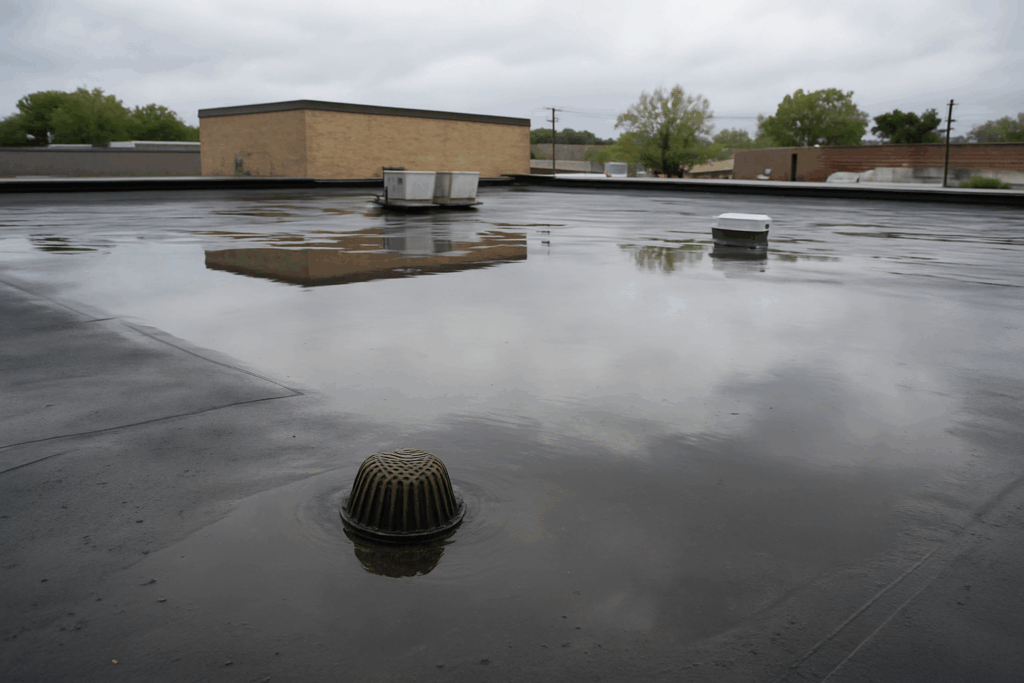
Where are Common Areas Where Ponding Water Forms on Retail Roofs?
Ponding water may be caused by design or structural issues most of the time, but there are also areas on the roof more prone to the issue. If you believe that water is ponding on your roof, check near the following places:
- Around HVAC units, vents, and other rooftop equipment, especially if your roof is older
- Near drains with blocked flow
- Along seams and transitions between roof sections, as these may blister and grow brittle
- At parapet walls and internal gutter systems
- On older roofs with uneven insulation or decking
How Does Standing Water Damage Commercial Roofing Systems in Rio Grande?
As a commercial property owner or manager, it’s important to know that standing water presents a huge risk to your building and business. When left unresolved, ponding water accelerates membrane deterioration, particularly with materials like TPO, EPDM, and modified bitumen. What does that look like on a flat or low-slope roof?
Certain membranes with seams will grow brittle and separate. Others may blister and crack. Ponding water can also add structural stress on decking and supports due to the added weight. Moisture intrusion increases the load on the structure, too. Further water infiltration means that you’ll end up with interior leaks that compromise not only the building but your operations, especially if mold forms.
Why Does Rio Grande’s Climate Make Ponding Worse?
Cape May County is a challenging environment—not for business but for your roof. Rio Grande is located between two bodies of water: the Delaware Bay and the Atlantic Ocean. Furthermore, there are wetlands scattered throughout the area, adding further humidity to the air. Salt, moisture, winds, and South Jersey’s four seasons all spell trouble for a flat or low-slope roof with drainage issues. Even new roofs may struggle if not installed correctly.
Here’s how Rio Grande’s climate directly impacts your commercial roof:
- Frequent rains may cause overflow of water on a roof
- Freeze-thaw cycles expanded trapped water
- Roofing membranes grow weak due to UV exposure in the summer
- Shaded and low-lying areas experience slower evaporation
Warning Signs Business Owners Should Watch For
There are distinct signs that your commercial flat roof is going to have issues with ponding water (or may be experiencing the side effects of it). Keep an eye out for the following problems:
- Persistent water remaining on the roof 48 hours after rainfall
- Soft or spongy areas when walking the roof
- Stains on the ceiling or dripping near exterior walls
- Increased HVAC inefficiency, noted on utility bill, and caused by wet insulation
- Visible algae, mold, debris rings, and membrane discoloration
If you notice any of the above, be sure to call a commercial roofer in Rio Grande like RGB Construction. Having your roof’s issues diagnosed and then resolved before the issue becomes severe is the best course of action. You’ll save yourself time and money.
Frequently Asked Questions About Standing Water on Commercial Roofs
How long is it safe for water to sit on a flat roof?
Water should not remain on a commercial flat roof for more than 48 hours after rainfall. Longer ponding increases the risk of membrane damage and leaks.
Can standing water cause interior damage even if there’s no visible leak?
Yes. Trapped moisture can saturate insulation and weaken decking before any interior signs appear.
Are newer flat roofs immune to ponding water issues?
No. Even newer systems can experience drainage problems if debris accumulates or installation slopes are insufficient.
Does standing water affect HVAC efficiency?
Wet insulation and rooftop moisture can reduce thermal performance, causing HVAC systems to work harder.
Should retail businesses schedule inspections even without leaks?
Yes. Preventive inspections help identify drainage and slope issues before they impact tenants or operations.
Get Help With Your Retail Property with Commercial Roofing Contractors in Rio Grande
Standing water on your commercial roof in Rio Grande is a problem, one that shouldn’t be overlooked. Water that doesn’t drain can lead to accelerated degradation of your flat roof system, as well as unhealthy mold growth from leaks. While being proactive with maintenance on your roof can prevent standing water, some storm-related damage and regular aging can also cause it. If you notice ponding water on your retail center’s roof, don’t wait. Give a commercial roofing contractor in Rio Grande a call.
RGB Construction has been serving Cape May County and the rest of South Jersey for over two decades. Our team is experienced in commercial flat roofs, including installation, maintenance, and repairs. We also offer 24/7 emergency services and are GAF-certified.
Concerned About Standing Water on Your Commercial Roof in Rio Grande, NJ (08242)?
Standing water can quietly damage flat commercial roofs throughout Rio Grande’s retail districts, leading to leaks, insulation failure, and costly business interruptions. RGB Construction provides professional flat roof inspections and drainage evaluations for commercial properties in 08242 before problems escalate.
- ✔ Commercial flat roof inspections and moisture assessments
- ✔ Drainage corrections and ponding water solutions
- ✔ Repairs for TPO, EPDM, and modified bitumen systems
- ✔ Service throughout Rio Grande and surrounding Cape May County areas
Call RGB Construction at
(856) 264-9093
to schedule a commercial roof evaluation, or request an inspection online.