
Living or owning a business in North Cape May means beautiful sunrises and sunsets, gentle sea breezes, and all the joy that comes with proximity to a beach. Unfortunately, the closer your home or business sits to the water, the greater that risk of the roof getting damaged. There is a quiet yet serious issue to keep in mind: salt-driven corrosion. While most components of the roof won’t rust easily, there are roof fasteners made with metal that can oxidize, leaving your roof’s defenses weakened.
Key Takeaways
- Salt air in North Cape May accelerates corrosion in roof fasteners, even on newer roofs.
- Corroded fasteners can loosen shingles, flashing, and vents, increasing the risk of leaks and wind damage.
- High humidity, coastal winds, and freeze-thaw cycles compound corrosion problems over time.
- Rust stains, lifted shingles, and recurring leaks are common warning signs of fastener failure.
- Routine inspections and coastal-grade fastening materials help extend roof lifespan in bayfront environments.
Here’s everything you need to know about salt-driven corrosion, including how it happens and ways to prevent it from getting worse.
Understanding Salt-Driven Corrosion in North Cape May
Salt accelerates metal deterioration, leading to what is known as “salt-driven corrosion.” When microscopic salt particles are carried on wind inland, they settle on your roof. Fasteners, flashing, vents, and exposed metal edges may not be made of salt-resistant materials and, therefore, the salt will stick.
When salt sticks to metal, it attracts more moisture, leading to oxidation, the chemical reaction that causes rust. Furthermore, unlike rainwater, saltwater mist will cling to metal surfaces for longer, keeping your roof more damp. In other words, corrosion will continue even during dry days. Over time, exposed metal starts to weaken, compromising your roof’s functionality.
Salt also speeds up normal aging. Fasteners, for example, lose structural strength over time. When salt-driven corrosion strikes, however, they fail prematurely—sometimes on new roofs.
Why North Cape May Roofs Are Especially Vulnerable
As mentioned previously, salt-driven corrosion is due to the presence of salt in the air that sticks to metal pieces of your roof and induces deterioration. Salt air assails North Cape May from every direction. Add in moisture from the wetlands, and your roof is the prime target for salt-related corrosion. There is also higher humidity throughout the year, frequent storm activity, strong winds, and intense freeze-thaw cycles.
Each of these things can cause damages to the roof, including gaps around fasteners. Many older homes in Cape May County have outdated fastening systems that are especially vulnerable to salt-driven corrosion.
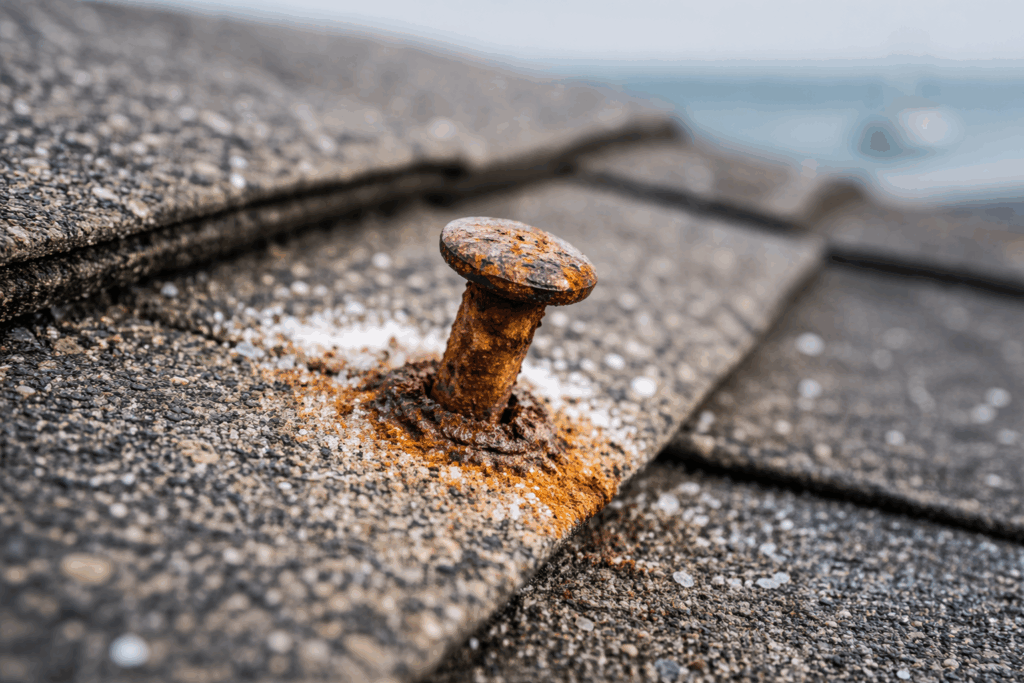
Common Roof Fasteners Affected by Salt Air
Knowing how salt corrosion works is just as important as knowing what is affected. There are several roof fasteners and materials that may be affected by salt, including:
- Nails used in asphalt shingle roofs
- Screws and plates on flat or low-slope roofs
- Fasteners securing ridge vents, drip edges, and flashing
- Exposed metal fasteners on metal roofing and vent boots
Signs of Corroded or Failing Roof Fasteners
While doing routine maintenance on your roof in North Cape May, NJ, be sure to keep a look out for the following signs that your roof fasteners are corroded:
- Rust staining on shingles or roof decking
- Loose or lifted shingles after wind events
- Popped nail heads or backing-out screws
- Leaks forming around penetrations
- Sagging or soft roof decking caused by water intrusion
If you notice any of these signs, be sure to contact a residential roofing contractor in North Cape May as soon as possible. These may appear minor, but any level of failure opens your roof up to major roofing problems. For example, a loose shingle can tear off during the next storm and leave your underlayment and roof deck wide open for water intrusion.
How to Prevent Salt-Driven Corrosion in North Cape May
Salt-driven corrosion is a natural occurrence but also terribly damaging. Fortunately, there are ways to prevent salt from affecting your roof. Consider the following to help ward off salt-driven corrosion and keep your roof in tip-top shape:
- Have stainless steel or hot-dipped galvanized fasteners installed
- Ensure fastener spacing and depth is correct
- Seal around roof penetrations and exposed fasteners
- Conduct routine inspections after winter and storm seasons
- Replace compromised components in a timely manner
Newer fasteners with salt-resistant materials, inspections, and maintenance will help keep your roof from getting damaged. Be sure to schedule a roof inspection at least twice a year. Having a roofing professional take a look means getting the most accurate snapshot of your roof’s overall health. If any salt-driven corrosion or other damages are found, the roofer can provide you with recommendations for repairs.
Frequently Asked Questions
Why does salt air damage roof fasteners faster than inland environments?
Salt particles carried by coastal winds cling to metal components. When combined with moisture and humidity, they accelerate oxidation, causing fasteners to rust and weaken much sooner than expected.
Can corroded fasteners cause roof leaks?
Yes. As fasteners corrode, they can loosen or back out, creating gaps where water enters around shingles, flashing, and roof penetrations.
Are all roofing fasteners affected by salt corrosion?
Most standard steel fasteners are vulnerable. Stainless steel and hot-dipped galvanized fasteners hold up better in coastal environments like North Cape May.
How often should coastal roofs be inspected?
Homes near the bay should be inspected at least once a year and after major storms to catch corrosion before it leads to larger damage.
Is fastener corrosion visible from the ground?
Sometimes rust staining is visible, but many fastener issues occur beneath shingles or flashing and require a professional roof inspection.
Protect Your North Cape May Roof by Calling a Roofing Contractor in Cape May County
Salt-driven corrosion is very real and dangerous for your roof. Don’t wait until your fasteners start to rust. Schedule a roof inspection with a trusted roofing contractor in North Cape May today. RGB Construction has been serving the region for over twenty years. Our team has solutions for salt, wind, moisture, and rust to keep your roof going strong for years to come.
Concerned About Salt Damage on Your North Cape May Roof?
Homes in North Cape May face constant exposure to salt air, coastal winds, and moisture that can quietly corrode roof fasteners over time. RGB Construction provides thorough roof inspections and repairs designed for bayfront conditions throughout North Cape May, including zip code 08204.
- ✔ Coastal roofing inspections and corrosion assessments
- ✔ Fastener replacement and flashing repairs
- ✔ Asphalt shingle, flat roofing, and ventilation services
- ✔ Licensed, bonded, insured, and GAF-certified contractors
Call RGB Construction at
(856) 264-9093
to schedule a coastal roof inspection, or request an estimate online.