

Anyone who has ever struggled with a high electric bill has probably considered swapping their doors and windows to something more energy efficient. By creating a better seal around these openings, you help stop drafts, keep your HVAC functioning, and can even reduce noise. That said, when you’re shopping for new windows and doors, you need to think about the quality. Windows don’t come cheap, so you want to sure you’re investing in the right ones. With that in mind, let’s look at how to read energy ratings for windows and doors.
✔ Key Takeaways
- Energy ratings help you choose windows and doors that improve comfort and efficiency.
- A lower U-Value means better insulation against heat loss.
- Lower SHGC is best for hot climates; higher is fine for colder regions.
- Visible Transmittance indicates how much natural light enters your home.
- Air Leakage, DP rating, and Condensation Resistance all impact durability and performance.
The Importance of Reading Energy Ratings for Windows and Doors
You may be wondering why it’s necessary to know how to do this. We’ve got the answer. You want to make informed decisions about your home. Energy ratings help you do that. Here’s some reasons why energy ratings matter:
- Lower Energy Bills: Energy ratings, like the U-Value, show how well a window or door insulates your home. By choosing products with a better rating, you can reduce heating and cooling costs throughout the year.
- Improved Comfort: Properly rated windows help prevent drafts, hot spots, and cold spots inside your home.
- Durability and Performance: Looking at certain metrics gives you insight to how well a product stands up to harsh weather and long-term use.
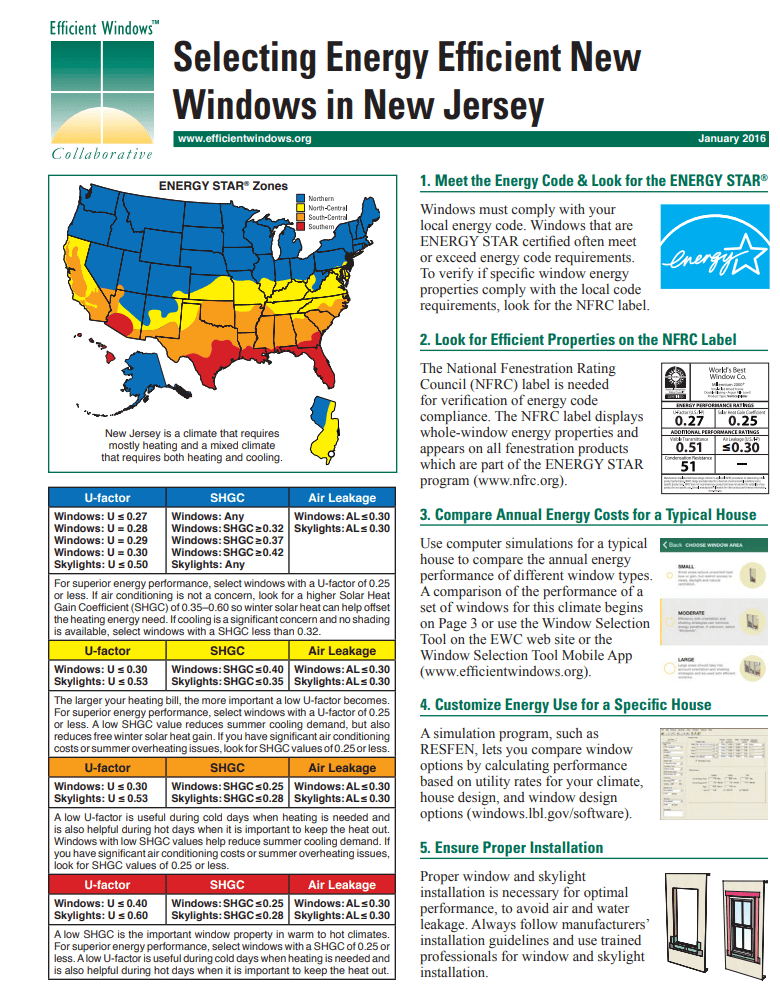
- Climate-Appropriate Choices: Some ratings are ideal for figuring out how a product will function in your location. For example, if you live in a hotter area of New Jersey, the SHGC is helpful. The DP can tell you if your windows will hold up against summer humidity in Cape May.
- Resale Value: Buyers value homes with energy-efficient upgrades, and documented ratings make your investment more appealing.
U-Value
This figure will tell you how well insulated this door or window might be. To be more specific, this number measures the amount of heat energy that can pass through the door/window. The lower the number, the less heat is allowed to pass through.
There is no such thing as perfect insulation, so don’t expect to find something with a value of 0. Most doors and windows are rated between 0.25 and 1.25, so try to aim for the lower end of that scale. These numbers come from the National Fenestration Rating Council, so you can check with them if you want to know how these ratings are determined.
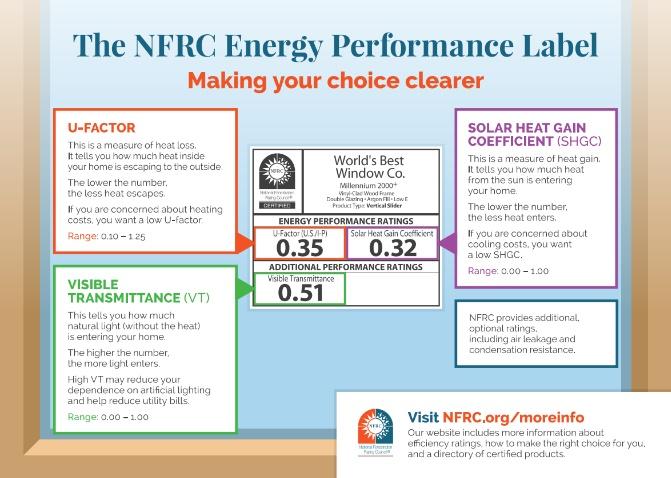
Nfrc Energy Performance Label
SHGC
This is another rating you are likely to see, and it stands for “Solar Heat Gain Coefficient.” While the U-value measures the effectiveness of a window or door in keeping heat inside the home, the SHGC is the opposite. These numbers tell you how effective the window or door will be in keeping heat outside the home. This factor is especially important for hot climates. In fact, those who live in cold climates might as well disregard this metric.
As with the U-factor, a lower number is better. The lower the SHGC rating, the less heat and solar radiation the product will allow through. This rating is important for some people because sunlight has a tendency to become heat when magnified through the glass of a window or door.
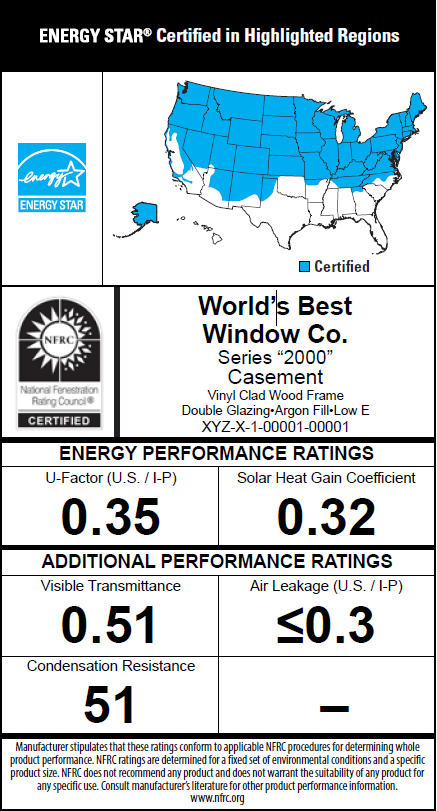
Nfrc Energy Star Label
Visible Transmittance
This number will give you a good idea of how much light can penetrate this door or window. In this case, we are talking about visible light, so don’t think that we are talking about UV rays or anything like that. In short, this metric will tell you how sunny and bright your home will be. In most cases, this number will be somewhere between 0 and 1.
For the reasons listed earlier, those who live in a hot climate should seek a window or door that has a low level of light transmittance. This will prevent the heat amplification effect described above. At the same time, this factor doesn’t have all that much to do with the warmth of your home. Some people like their homes to be a little brighter while others prefer a slightly darker setting.

Air Leakage
This number is pretty self-explanatory, as it measures the amount of air that can escape from the door or window in question. As you might imagine, this number is related to the U-factor, as a good air seal is essential for proper insulation. As with these other metrics, you want to go for the lowest number possible. No matter what your environment, a better seal will always be desirable. Most of the time, this number will be somewhere between 0.1 to 0.3.
DP
This one stands for design pressure, and it’s basically a measure of how durable the window or door might be. To be more specific, it tells you the approximate amount of pressure that would be needed to break the item. In this case, a higher number is better, as it indicates a stronger window or door.
This number might be important for a number of reasons. If you have small children or pets who might push or lean on the windows, you definitely want to aim for something with a higher DP rating. If you live in an area that experiences high winds on a regular basis, this is even more important. Most windows and doors will be rated somewhere between 30 and 50.
Condensation Resistance
Condensation is a funny thing, indeed. Without any interchange with the air outside your home, moisture can make its way inside. You might wonder how this can be possible, but the answer is very simple: the moisture was inside your home all along. Whenever you or anyone else in your home takes a breath, a certain amount of water vapor is expelled. If this water vapor has nowhere to go, it will gather on the windows.
Condensation resistance is usually measured on a scale of 1 to 100, so you’ve got a little bit more guesswork to do here. Still, all you really need to know is that higher numbers equal better resistance, so go for the highest number you can get. You should also be aware that condensation should never appear between the window panes. If it does, your product is defective.
❓ Frequently Asked Questions
Q: What is the most important energy rating to check?
The U-Value is crucial because it shows how well a window or door insulates against heat transfer.
Q: Do I need to worry about SHGC in New Jersey?
Yes, though it’s less critical than in hot climates. A moderate SHGC can help balance summer cooling and winter warmth.
Q: What’s a good Air Leakage rating?
Look for 0.1–0.3. The lower the number, the tighter the seal against drafts.
Q: Why does Design Pressure matter?
DP shows how much force a window can withstand. It’s especially important in storm-prone areas.
Q: How can I prevent condensation on my windows?
Choose windows with higher condensation resistance ratings (closer to 100) and ensure good ventilation indoors.
Contact a South Jersey Window Contractor Today
When you pick up a package and look at all those ratings, it can be very easy to get confused. Thankfully, you’ve learned how to read energy ratings on windows and doors from a window contractor who’s been in business for over 20 years! At RGB Construction, we can help you figure out which windows suit your home and make it more efficient.
Upgrade to Energy-Efficient Windows & Doors
Ready to lower your utility bills and make your home more comfortable?
RGB Construction can help you choose and install windows and doors that are right for your home.