
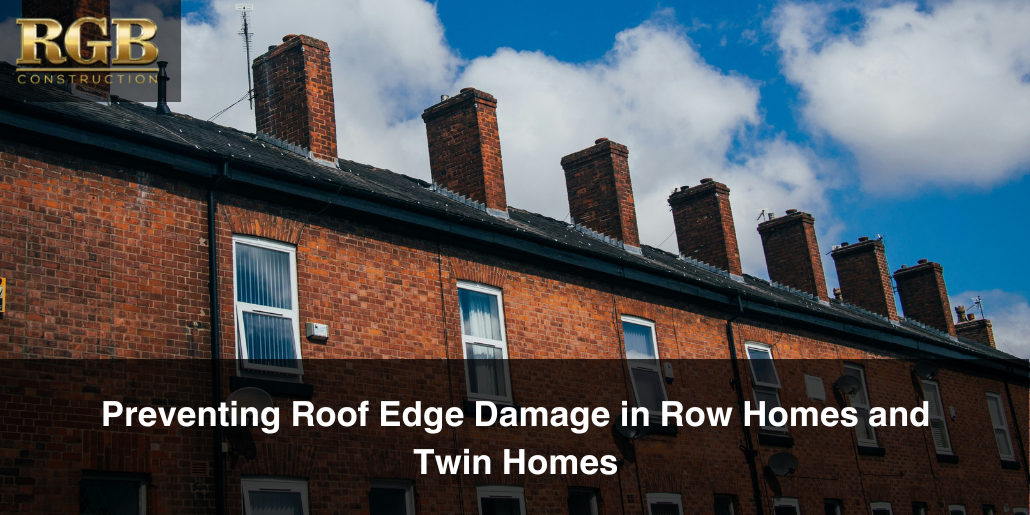
South Jersey has a plethora of communities with row homes and twin homes, which are structurally unique compared to many single homes these days. For homeowners and renters of these kinds of properties, taking care of your roof comes with special considerations. Since you share a roof with a neighbor—or two—the roof edges tend to be vulnerable to damage. In fact, many leaks begin at transitions in the fascia, drip edges, parapets, and shared walls, rather than open roof fields. To help your roof last longer, let’s discuss how to prevent roof edge damage in row homes and twin homes.
Key Takeaways: Preventing Roof Edge Damage in Row Homes and Twin Homes
- Roof edges in row homes and twin homes experience greater stress due to shared walls, narrow roof layouts, and concentrated water runoff.
- Common failure areas include fascia boards, drip edges, starter shingles, and parapet flashing where moisture intrusion frequently begins.
- South Jersey weather conditions such as freeze-thaw cycles, storms, humidity, and UV exposure accelerate sealant and flashing deterioration.
- Poor drainage, clogged gutters, and maintenance differences between neighboring properties often contribute to roof edge damage.
- Routine inspections, gutter maintenance, and post-storm evaluations help prevent costly structural repairs and extend roof lifespan.
Structural Characteristics That Increase Roof Edge Stress
Why are row homes and twin homes more susceptible to roof edge issues? It’s all in the design. Row homes and twin homes tend to have more narrow roof widths that concentrate water runoff. Furthermore, there are many structural elements that are shared. The shared walls can expand and contract differently, creating differences in the connected houses as the building ages. For instance, older framing can shift unevenly, causing depressions on one roof and not the other (particularly in the case of low-slope or flat areas).
Another reason roof edge damage occurs is trapped moisture. Homes with shared walls often have limited attic ventilation. That leads to increased moisture.
Common Roof Edge Failure Areas in Row Homes and Twins
There are three key areas where roof edge failure can be spotted on row homes and twins:
- Fascia and Soffit Deterioration: Wood fascia can absorb moisture when gutters are clogged or when sections of paint disintegrate, leaving wood exposed.
- Drip Edge and Starter Shingle Damage: Missing or improperly installed drip edges allow water to seep into fascia or behind gutters. Wind uplift can also cause drip edges and starter shingles to loosen. Ice dams, in the event they form, can damage these areas and make them susceptible to water intrusion.
- Parapet Walls and Roof-to-Wall Transitions: As mortar ages, it may crack along parapet caps. Flashing may also separate from masonry and roofing materials. In these places, water can intrude and then move laterally into neighboring units.
Weather Conditions That Accelerate Roof Edge Damage
South Jersey as a whole has four distinct seasons with dramatic temperature shifts. It can be hot, steamy, and stormy in the summer and freezing cold in the winter. These temperature fluctuations accelerate normal wear and tear on roofing materials. Freeze-thaw cycles widen small flashing gap. Wind-driven rain may enter under lifted shingles and loosened flashing. In the summer, sealants dry quickly around edge flashing.
All of these temperature swings and environmental conditions create gaps of various sizes that allow water to reach the underlayment or roof deck.
Gutter and Drainage Problems That Lead to Edge Failure
One major issue that can cause water problems in any building, be it row home, twin home, single or commercial, is poor drainage. Clogged gutters or improperly pitched gutters don’t send water where it needs to go. Instead, the backed up water is driven behind fascia boards. Detached downspouts can cause an overflow at the corners of the building, where water is going to pool around the foundation. When that happens, you may get moisture in the foundation.
Neighboring Property Factors Unique to Attached Housing
Now, while most homeowners conduct some form of maintenance, there may be discrepancies in how you and your neighbor go about it. That can lead to some differences in how adjoining homes and their roofs age. For example, if one side gets a full roof replacement, the transitional area may be disturbed. Additions or siding changes can alter water flow patterns. Lastly, tree coverage between closely spaced homes can increase debris buildup in the gutters and along roof valleys.
Warning Signs of Roof Edge Damage to Watch Out For
Fortunately, if you’re worried about roof edge damage for your row or twin home, you will see signs. When conducting visual inspections, look for the following:
- Peeling paint or staining along fascia boards.
- Sagging gutters or loose fasteners.
- Shingles lifting or curling along roof edges.
- Vegetation or moss growth near gutter lines.
- Water stains near exterior walls or ceilings inside.
- Drafts along upper-floor concerns.
- Musty smells near attic edges.
- Ice buildup forming repeatedly at roof edges.
- Increased pest activity around soffits.
See any of these? Consider scheduling a roof inspection with a South Jersey roofing contractor to learn the extent of the damage.
Preventive Maintenance to Protect Roof Edges
Routine maintenance is preventive, meaning it stops issues before they begin. While any roofing contractor will tell homeowners to conduct roofing maintenance, it is all the more necessary for row homes and twin homes throughout South Jersey. Warding off damage and keeping the transitions between your home and the neighbors’ is key in keeping everything inside safe and dry.
Here are several key maintenance tasks to perform (or have a roofer do) that will protect your roof from roof edge damage:
- Annual or biannual roof inspections focused on flashing and drip edges.
- Routine gutter cleaning and drainage testing.
- Sealant replacement around flashing before flashing occurs and flashing replacement if broken.
- Post-storm inspections after high winds.
- Attic airflow evaluations to prevent condensation damage.
Frequently Asked Questions About Roof Edge Damage in Row Homes and Twin Homes
Why are roof edges more vulnerable in row homes and twin homes?
Attached homes share walls and structural transitions that expand and settle differently over time. These movement differences can loosen flashing and shingles along roof edges, creating pathways for water intrusion.
Can my neighbor’s roof maintenance affect my home?
Yes. Repairs or replacements performed on one property may disturb shared flashing or roof transitions. Differences in gutter cleaning or maintenance schedules can also change how water flows between homes.
How often should roof edges be inspected?
Most roofing contractors recommend annual or biannual inspections, especially after strong storms or winter weather. Regular inspections help identify lifted flashing, gutter problems, or early fascia deterioration.
What are the earliest warning signs of roof edge damage?
Peeling fascia paint, sagging gutters, lifted shingles, attic odors, or recurring ice buildup along roof edges are all early indicators that repairs may be needed.
Does preventative maintenance really make a difference?
Preventative maintenance significantly reduces the risk of leaks and structural deterioration. Cleaning gutters, replacing aging sealants, and checking flashing regularly can prevent emergency repairs.
Call a South Jersey Roofing Contractor for Roof Edge Protection
Roof edge damage can cause many roofing issues, particularly in homes with shared walls and roof lines. Row homes and twin homes are more susceptible to roof edge damage due to discrepancies in maintenance, aging materials, and environment. Keep any eye out for damage and schedule roof inspections regularly.
RGB Construction is an experienced roofing contractor that has been in business for over two decades. Our team is licensed, insured, and bonded, and we utilize only the highest quality roofing materials. Your safety matters. See why excellence is our standard. Give us a call today.
Protect Your Row Home or Twin Home From Roof Edge Damage
Roof edge problems in attached homes often begin at fascia boards, flashing, and shared wall transitions long before leaks become obvious inside. RGB Construction provides detailed inspections and professional repair solutions designed to address the unique roofing challenges faced by South Jersey row homes and twin homes.
- ✔ Fascia, soffit, and drip edge inspections and repairs
- ✔ Flashing evaluation at parapets and shared roof transitions
- ✔ Gutter drainage assessments to prevent water backup
- ✔ Leak detection and attic moisture evaluations
- ✔ Licensed, bonded, insured, and GAF-certified roofing contractors
Call RGB Construction at (856) 264-9093
to schedule your roofing inspection, or
request an estimate online.