

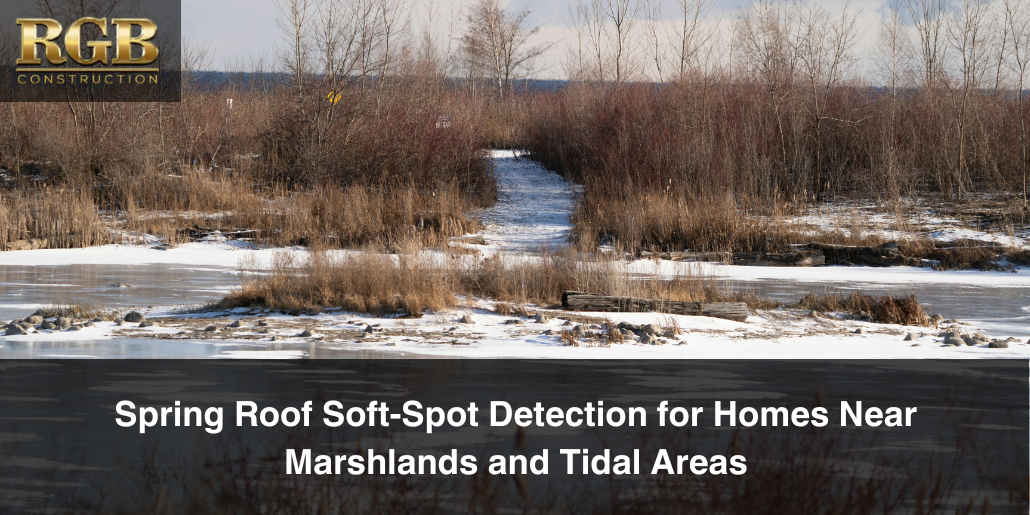
South Jersey is a unique landscape that has a little bit of everything: coast, marsh, and tidal environments. These places are also where numerous residential homes can be found. While there’s beauty in these locations, there is also the threat of high seasonal moisture. The greater amount of moisture a roof faces, the more vulnerable it becomes. In fact, your home may have developed roof soft spots over the winter. It’s important to know about soft spots, including how they begin and how you can find them before it’s too late.
Key Takeaways: Spring Roof Soft-Spot Risks Near Marshlands
- Homes near marshlands and tidal areas experience higher moisture exposure year-round
- Winter moisture buildup often leads to soft spots becoming visible in spring
- Prolonged dampness weakens roof decking and structural supports
- Early detection helps prevent costly deck replacement and interior damage
- Routine professional inspections are essential for coastal-adjacent homes
What Roof Soft Spots Are and Why They Develop
Roof soft spots occur when the roof deck—the structure that supports the weight of all your roof materials—begins to weaken and decay. The roof deck isn’t normally exposed to moisture, not when the roof materials, like shingles and underlayment, do their job. However, when there is excess humidity, driving wind, and freeze-thaw cycles, moisture finds a way to infiltrate.
There is a direct correlation between how long roofing materials stay damp and how fast wood deteriorates. Unfortunately, in places along the coast and marshlands, humidity is almost constant. Pair that with normal factors that cause damage.
Roof soft spots develop slowly because water infiltration is also slow. It starts with damaged shingles and humidity and ends with moisture accelerating wood rot. That’s why roofing contractors in South Jersey continue to recommend at least biannual roofing inspections to catch issues like soft spots.
How Marshlands and Tidal Areas Increase Moisture Exposure
Location plays a huge role in the risk of roof soft spots. Wetlands have elevated levels of moisture throughout the year. For South Jersey homes along the coast or bay, there’s also the danger of salt corrosion. Salt air and moisture both accelerate roof wear and tear, particularly with metal hardware. For example, some nails or flashing may corrode faster due to salt air, opening up tiny fissures in the roof that allow moisture to seep in.
Winter-to-Spring Transition and Hidden Roof Damage
Spring is often the time to discover soft spots on the roof, not only because it’s one of the best times for a roof inspection. Roof soft spots often develop in the winter, particularly when snow accumulates and then melts. Ice dams may form on roofs where ventilation is inadequate. Freeze-thaw cycles may also allow water to infiltrate microscopic openings and cause them to grow wider.
But that is just one reason soft spots begin in the winter and are discovered in spring. During the colder months, marshy areas have persistent fog from humidity. That leads to reduced sunlight exposure and longer periods of dampness.
About the time spring comes around, the roof deck has been saturated. Warmer temperatures cause expansion of compromised materials, and increased rainfall reveals leaks.
Common Warning Signs of Roof Soft Spots
Soft spots aren’t always detected with a visual inspection of the roof. Here are several signs to look for that point to moisture intrusion and potential soft spots:
- Uneven of sagging roof surfaces
- Shingle depression, rippling, or lifting
- Moss or algae growth
- Flashing separation
- Gutters filled with shingle granules
- Musty odors in attic spaces
- Discolored insulation
- Bubbling paint and discoloration on the ceiling
These all point to excessive moisture and interior humidity, as well as possible water spreading through the roof deck. If you notice any of these signs, be sure to get in touch with a roofing contractor in South Jersey as soon as possible.
How Soft Spots Affect Structural Integrity Over Time
Homeowners need to be aware of the danger that soft spots pose. While they may start small and lead to only minor issues, such as moss or a slight leak, soft spots grow with time. When wood rots and grows weaker, the load-bearing capacity decreases. Fasteners also loosen as wood degrades. This is the worst case scenario because without strength, your roof could collapse.
Next, consider the secondary risks: mold growth, insulation and drywall damage. These issues aren’t only a structural problem but a health-related one as well.
How are Soft Spots Detected?
Detecting soft spots on a roof is a crucial step in both maintenance and prevention. First, schedule a roof inspection with a professional roofer. The inspector will look for depressions, structural irregularities, and flashing issues. Then they’ll head inside to see if there is any insulation discoloration or softness. If you noticed any signs of a leak, be sure to point it out to them. Moisture detection tools, like meters or thermal imaging, may come into play if there are staining patterns present.
Frequently Asked Questions About Roof Soft Spots in Coastal South Jersey
What causes roof soft spots near marshlands?
High humidity, fog, and slow-drying conditions allow moisture to penetrate roofing materials and weaken decking over time.
Can soft spots be repaired without replacing the roof?
In some cases, localized decking repairs are possible. However, widespread damage may require more extensive restoration.
How often should coastal-area roofs be inspected?
Homes near wetlands and tidal zones should be inspected at least once per year and after major storms.
Are soft spots always visible from the outside?
No. Many soft spots develop beneath shingles and are only detected through professional inspection.
Does salt air affect roof deterioration?
Yes. Salt-laden air can accelerate corrosion and material breakdown, increasing moisture-related damage.
Is spring the best time for roof evaluations?
Yes. Spring inspections reveal winter-related moisture damage before it leads to major structural issues.
Schedule Your Spring Roof Soft Spot Evaluation Today
Roof soft spots are places on the roof that have weakened due to moisture intrusion. Without prompt care, soft spots can become structural hazards. It’s important to schedule a roof inspection if you notice any signs of roof damage, particularly if your home is located along the coast or marshlands.
RGB Construction is repeatedly ranked among the best South Jersey roofers in the area. We’ve been serving the community for over twenty years and have hundreds of satisfied residential and commercial customers. How do we do it? Excellence is the standard.
Concerned About Soft Spots on Your South Jersey Roof?
Homes near marshlands, tidal rivers, and low-elevation areas face increased risks of hidden moisture damage and weakened roof decking. RGB Construction provides detailed spring roof inspections to identify soft spots before they lead to major structural problems.
- ✔ Soft-spot and moisture intrusion inspections
- ✔ Roof decking and structural repairs
- ✔ Ventilation and drainage evaluations
- ✔ Licensed, bonded, insured, and GAF-certified roofing contractors
Call RGB Construction at (856) 264-9093
to schedule your spring roof inspection, or
request an estimate online