
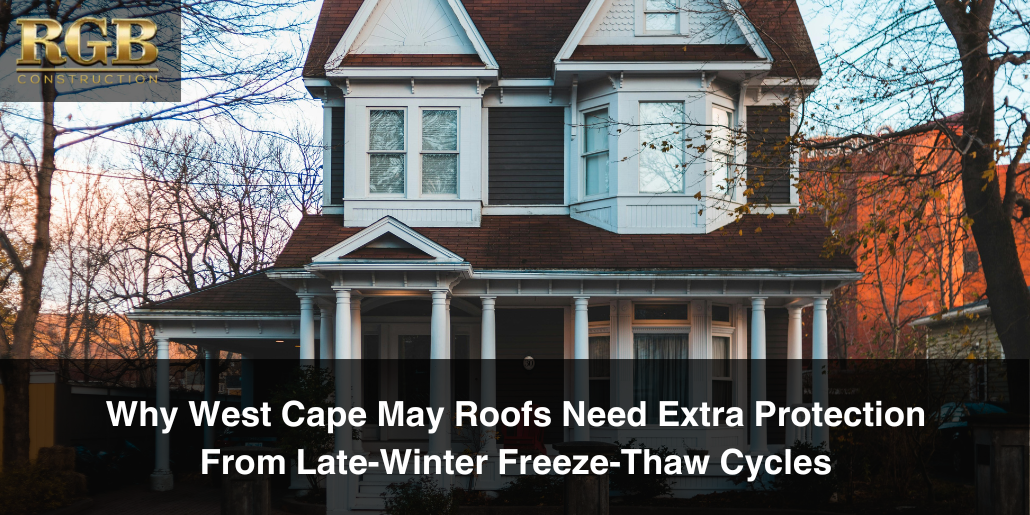
During late winter, you may think that the cold will be over soon and you don’t have to worry about any further freezing. However, freeze-thaw cycles are far more intense along coastal areas like West Cape May. With the added moisture in the air, your roof is more susceptible to damage during these late-winter freeze-thaw cycles. Damages, like tiny cracks and tears, can form throughout winter and produce delayed side effects, like leaks, later in the year.
Let’s discuss why West Cape May roofs—especially the historic ones—need extra protection from late-winter freeze-thaw cycles and the damage they can produce.
Key Takeaways
- Late-winter freeze-thaw cycles force water into small roof openings, causing expansion-related damage.
- West Cape May’s coastal moisture and humidity increase the risk of leaks and material breakdown.
- Shingles, flashing, and roof decking are especially vulnerable during repeated temperature swings.
- Damage from freeze-thaw cycles often goes unnoticed until spring rain exposes leaks.
- Early inspections and added roof protection help prevent costly repairs later in the year.
What Are Freeze-Thaw Cycles and Why Do They Matter?
A freeze-thaw cycle is a natural occurrence where water turns to ice and melts again. This is common in winter when precipitation falls, begins to melt in the sunlight, freezes as temperatures drop overnight, and then start warming throughout the day. When snow accumulates on the roof, the freeze-thaw cycle becomes a bit more problematic. Melting snow can enter into small cracks and seams, where it will freeze. Frozen water expands, widening the cracks and separating seams, leading to a wider gap that more water can enter.
This continuous expansion and contraction stresses your shingles, flashing, and fasteners and may result in leaks.
Why are West Cape May Roofs at Higher Risk?
Having a home located in West Cape May means that your roof is exposed to a trifecta of environmental conditions: moisture, wind, and UV exposure. Proximity to the ocean, bay, and wetlands means that your roof is constantly wet. Salt in the air may corrode older fasteners and hardware, increasing the risk of loose shingles and flashing. Wind exposure further worsens the wear and tear on your roof by creating uplift that allows rain to infiltrate the underside of your roofing materials.
Furthermore, West Cape May is filled with older historic homes, some that have aging components. If these areas haven’t been updated in a while, they are a weak link that increases the chance of roof damage from freeze-thaw cycles.
Common Roofing Problems Associated with Late-Winter Freeze-Thaw
Now that you’ve learned what happens to roofing during late-winter freeze-thaw cycles and why you’re roof is more at risk, let’s turn to the problems. What can happen if freeze-thaw cycles impact your roof?
Here are some common roofing problems that may occur due to freezing and thawing:
- Cracked or lifted shingles
- Loosened flashing around chimneys, vents, and skylights
- Small leaks that worsen rapidly once spring rain begins
- Decking soft spots caused by repeated moisture exposure
Any of these problems can become severe quickly. Don’t wait until there are interior ceiling stains or a musty odor in your home. Call a roofing contractor in West Cape May for repairs.
Reasons to Schedule a Roof Inspection in West Cape May in Late Winter
One way to prevent late-winter freeze-thaw cycles from doing damage is to schedule a roofing inspection with a trusted West Cape May roofer. Late winter and early spring are ideal times to schedule inspections for a few reasons. First, the roofer can detect minor issues before they worsen and provide you with repairs that are lower cost. You also have better scheduling, since late winter is not peak roofing season.
The roofing inspector can also provide you with recommendations for future upgrades, such as new insulation, enhanced ventilation, and coastal-grade roofing. All of these things can help your roof endure freeze-thaw cycles more easily. In turn, your roof will last longer and have fewer issues.
Frequently Asked Questions
Why are freeze-thaw cycles worse near the coast?
Coastal humidity keeps roofing materials damp longer, allowing water to penetrate cracks before refreezing.
Can freeze-thaw damage cause leaks months later?
Yes. Small fractures and loosened flashing often worsen over time, leading to spring or summer leaks.
Do newer roofs still need protection?
Even newer roofs can suffer flashing movement or sealant failure during repeated temperature swings.
Is late winter a good time for a roof inspection?
Yes. Inspections during this period identify damage before spring rain accelerates deterioration.
Get Your Roof Extra Protection from a Roofing Contractor in West Cape May, NJ
Freeze-thaw cycles are recurring. Year after year, moisture freezes then melts. For that reason, damages from these cycles may not be apparent after one year. It takes time, but the damages that ensue can be terrible. Early detection with a late-winter roof inspection and preventative maintenance can help you better protect your roof from problems. Before spring hits, schedule an inspection with a local roofing contractor like RGB Construction.
We’ve been in business for over twenty years, understand Cape May County’s climate, and are GAF-certified. Our team is fully licensed, bonded, and insured to give you peace of mind and the best roofing experience ever. See why excellence is our standard.
Need Roof Protection in West Cape May, NJ?
Late-winter freeze-thaw cycles can quietly damage roofs throughout West Cape May, especially in coastal and wetland-adjacent areas. RGB Construction provides inspections and roof protection services for homes in zip code 08204, helping prevent leaks and structural issues before spring storms arrive.
- ✔ Roof inspections after winter freeze-thaw cycles
- ✔ Shingle, flashing, and underlayment assessments
- ✔ Preventative repairs to reduce spring leak risks
- ✔ Licensed, bonded, insured, and GAF-certified roofing team
Call RGB Construction at
(856) 264-9093
to schedule a roof inspection, or request an appointment online.