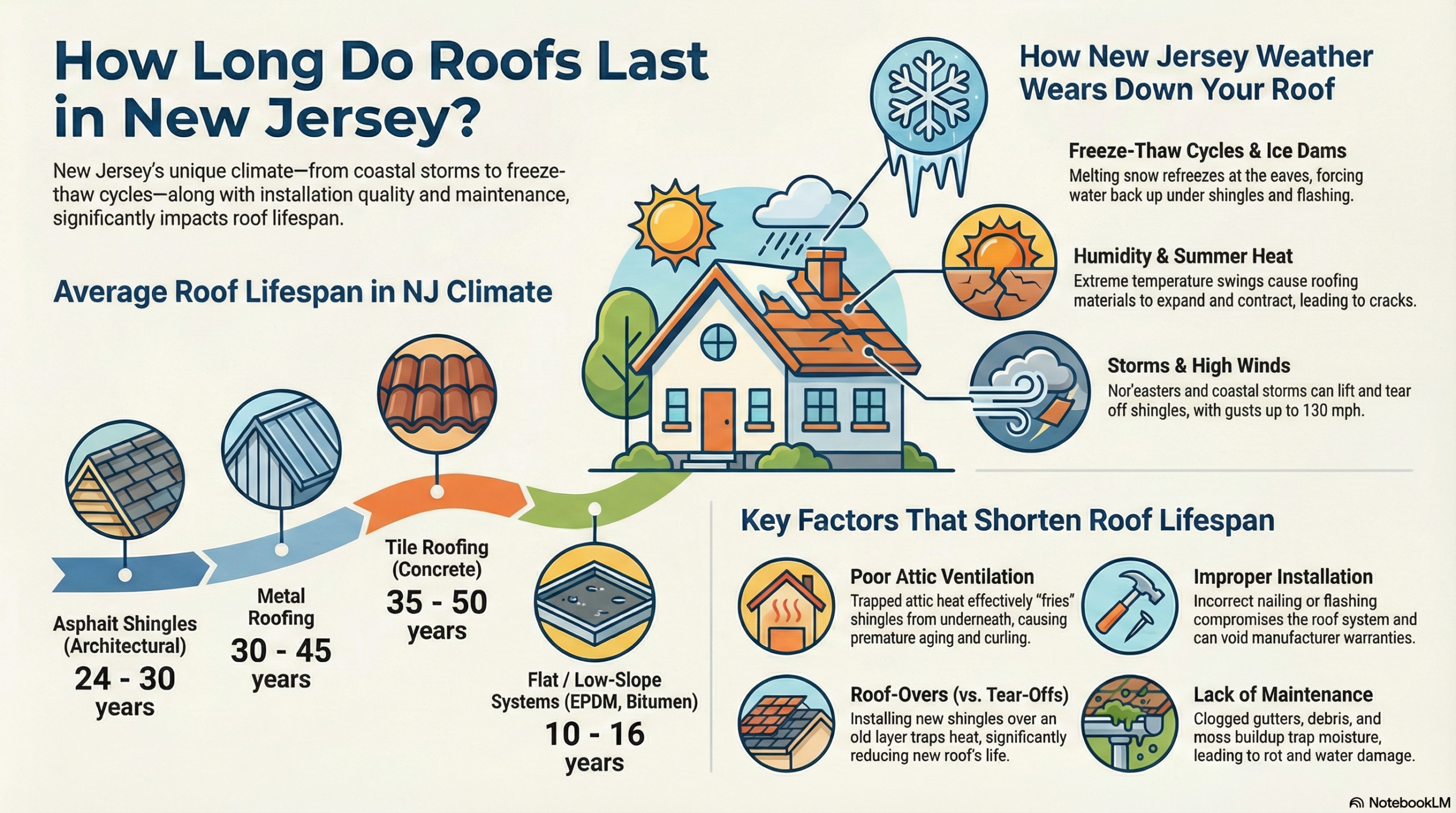
In New Jersey, most residential roofs last between 20 and 50 years, depending on the roofing material, installation quality, attic ventilation, maintenance, and exposure to the state’s unique weather patterns.
Unlike national averages, roof lifespan in New Jersey is heavily influenced by freeze-thaw cycles, humidity, seasonal storms, and snow load. Understanding how these factors affect different roofing systems can help homeowners decide when repairs make sense—and when replacement is the smarter long-term option.
Key Takeaways: Roof Lifespan in New Jersey
Asphalt shingle roofs in NJ typically last 20–30 years, not the full “30-year” or “lifetime” label.
Metal and tile roofs last longer but still depend on proper installation and ventilation.
Freeze-thaw cycles, humidity, and storms accelerate roof aging across New Jersey.
Installation quality often matters more than brand or warranty length.
NJ homeowners should begin professional inspections once a roof reaches 15–20 years old.
How Long Do Roofs Last in New Jersey?
Average Roof Lifespan in New Jersey by Material
Roof lifespan varies significantly based on material choice, but real-world performance in New Jersey often differs from manufacturer expectations.
Asphalt Shingle Roofs
Asphalt shingles are the most common roofing system in New Jersey homes. While manufacturers may advertise 30-year or lifetime warranties, most shingle roofs in NJ last between 20 and 30 years when properly installed and ventilated.
Metal roofs typically last 40–50 years in New Jersey. They perform well against snow shedding and temperature swings but still require proper underlayment, flashing, and ventilation to avoid premature issues.
Tile Roofing (Clay or Concrete)
Tile roofs offer excellent durability, often lasting 40–50+ years, but they are heavier and require structural support. Freeze-thaw exposure can still affect underlayment and flashing systems beneath the tile.
Flat & Low-Slope Roofing Systems
Flat roofs commonly found on additions and commercial buildings (EPDM, modified bitumen) generally last 15–25 years in New Jersey. Drainage and maintenance are critical due to snow and ice accumulation.
Average Roof Lifespan in New Jersey by Material
Realistic lifespan expectations based on New Jersey climate conditions, installation quality,
and long-term maintenance — not just manufacturer warranties.
Roofing Material
Manufacturer Warranty Range
Realistic NJ Lifespan
Common Failure Causes in NJ
Best Fit for NJ Homeowners
Source
3-Tab Asphalt Shingles
20–25 years
12–20 years
Freeze-thaw cycles, snow load stress, wind uplift, ice dams caused by clogged gutters, and UV granule loss.
Budget-conscious homeowners or those planning to move within 10–15 years.
Installation Quality Matters More Than Material Alone
Even premium roofing materials will fail early if installed incorrectly. Common installation-related issues seen on New Jersey roofs include:
Improper nail placement
Insufficient attic ventilation
Skipping ice and water shield
Installing new shingles over old layers
Poor flashing around chimneys and valleys
Choosing the right contractor and system design is just as important as choosing the roofing material itself.
<iframe style=”width: 700px; max-width: 100%; height: 450px;” title=”How Long do Roofs Last in New Jersey?” src=”https://gamma.app/embed/5093kzzujmz0ptm”></iframe>
Roof Maintenance & Inspections for New Jersey Homes
Many NJ roofing professionals recommend annual or biannual inspections, especially once a roof passes 15 years of age.
Expert Audio Insight: How Long Do Roofs Last in New Jersey?
In this short audio segment, a New Jersey roofing professional explains how long roofs realistically last in NJ’s climate, why weather extremes accelerate wear, and what homeowners should watch for as their roof ages.
This expert insight reflects real-world experience from roofing inspections across South Jersey.
Expert Audio Insight: New Jersey Roof Lifespan Explained
In this short audio segment, a New Jersey roofing professional explains how long roofs realistically last in NJ’s climate, why freeze-thaw cycles and humidity accelerate wear, and what homeowners should watch for as their roof ages.
This audio complements the written guide below and reflects real-world experience from roofing inspections across South Jersey.
When Should a Roof Be Repaired vs Replaced in New Jersey?
In many cases, roof replacement becomes the better option when:
The roof is over 20 years old
Shingle damage is widespread
Repairs are becoming frequent
Granule loss and brittleness are visible
Moisture issues appear in the attic
A professional inspection can help determine whether continued repairs are cost-effective or if replacement offers better long-term protection.
Roof Lifespan in New Jersey: A Homeowner’s Study Guide
This guide answers frequently asked questions about roof durability in New Jersey—based on local climate conditions
(freeze-thaw cycles, humidity, storms) and the real-world performance of common roofing materials.
Pro Tip: If your roof is 15+ years old, NJ’s seasonal weather can hide early damage.
A professional inspection helps you decide whether to repair or plan for replacement.
Frequently Asked Questions
1) How do New Jersey winters affect a roof’s lifespan?
New Jersey’s freeze-thaw cycles and snow buildup put heavy stress on shingles and the roof system underneath.
Ice can form and thaw repeatedly, weakening shingles and flashing. Snow accumulation can also create ice dams,
which block drainage and force water back under shingles—raising the risk of leaks and structural damage.
2) What is the typical lifespan for different types of roofs in New Jersey?
In NJ, architectural asphalt shingles often last 25–30 years.
Standard three-tab shingles are typically 12–20 years.
Metal roofs can last 25+ years and may last much longer with proper maintenance.
Premium materials like slate, tile, and wood shake can last 50–100+ years when properly installed and maintained.
Storms common to New Jersey—like Nor’easters and hurricanes—can cause immediate damage that shortens roof life.
Winds above ~50–60 mph can lift or tear shingles, while hail can create divots and cracks and strip protective granules.
Once the surface is compromised, water infiltration becomes more likely and deterioration accelerates.
4) What’s the difference between a “50-year” warranty and a roof’s actual lifespan?
A manufacturer warranty (including “50-year” or “lifetime”) typically covers manufacturing defects,
not normal aging or weather damage. “Lifetime” usually means the period the original purchaser owns the home.
In real-world conditions, service life can be 5–10 years shorter than warranty labels due to UV exposure,
installation quality, climate, and maintenance.
5) How often should a roof be inspected in New Jersey?
Plan on a professional roof inspection every 1–2 years in New Jersey.
It’s especially important after major storms and both before and after winter.
Regular inspections help catch wind, hail, and freeze-thaw damage early—before leaks spread.
6) When should a roof be repaired versus replaced?
Repairs can be smart for isolated damage. Replacement is usually necessary when the roof is aging or shows widespread failure.
Signs replacement may be needed include shingles that are curled, cupped, cracked, or “bald” from granule loss.
If an asphalt shingle roof is over ~20 years old with frequent leaks or repeated repairs,
replacement is often the better long-term decision.
7) What are the most common signs that an asphalt shingle roof is failing?
Look for uneven shingles with cupped centers or curled edges, cracking, missing tabs, and visible granule loss.
Granules often collect in gutters, and you may see “bald” spots on shingles. Dark streaks (algae) or moss growth
can also signal the roof is aging and should be evaluated by a professional.
8) Does improper installation affect a roof’s lifespan and warranty?
Yes. Improper installation can dramatically shorten roof lifespan and may void the manufacturer warranty.
Common issues include incorrect nailing, poor flashing, and inadequate ventilation—making shingles more vulnerable to wind damage.
Following manufacturer installation requirements precisely is key, which is why certified contractors are strongly recommended.
Glossary of Roofing Terms
Term
Definition
Architectural Shingles
A premium asphalt shingle made with multiple laminated layers. Thicker and more durable than standard shingles, often lasting 25–30 years.
Freeze-Thaw Cycle
The process of water freezing (expanding) and thawing (contracting). Repeated cycles stress roofing materials and accelerate winter wear.
Granules
Ceramic-coated particles on asphalt shingles. They add color and protect shingles from UV damage; granule loss speeds aging.
Ice Dam
A ridge of ice at the roof edge that traps melting snow. Water backs up under shingles and can cause leaks.
Limited Lifetime Warranty
A warranty covering manufacturing defects for as long as the original homeowner owns the property. It does not guarantee the roof lasts for the life of the home.
Prorated Coverage
Warranty coverage where reimbursement decreases over time. After a non-prorated period, compensation is reduced based on roof age.
Three-Tab Shingles
A basic, single-layer asphalt shingle. Lower cost and typically shorter lifespan (about 12–20 years).
RGB Construction • 1104 Parliament Way, Cherry Hill, NJ 08003 • (856) 264-9093
At RGB Construction, EXCELLENCE is not just the goal – IT’S THE STANDARD!
Protecting Your Roof Investment in New Jersey
Understanding how long roofs last in New Jersey allows homeowners to plan proactively rather than react to emergencies. With the right materials, proper installation, and routine maintenance, many roofs can reach or exceed their expected lifespan—even in NJ’s demanding climate.
If your roof is approaching 15–20 years old, a professional inspection can provide clarity and help you avoid costly surprises.
At RGB Construction, EXCELLENCE is not just the goal – IT’S THE STANDARD!